
La casa del dragón
Detalles
Ep 1 00m Episodio 1
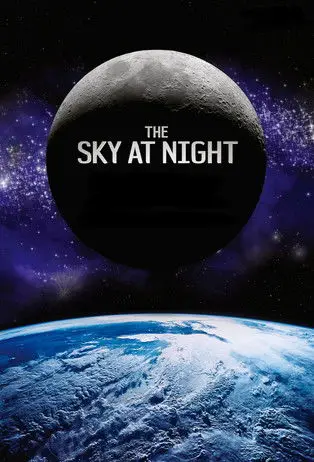
Tales of the Unexpected Astronomers, like other people, can be taken by surprise. Bright comets, new stars, outbreaks on planets, displays of aurora - none of these can be predicted; and in this programme Patrick Moore looks at some of these 'tales of the unexpected'.
The Sky at Night · S34E01
Ep 2 00m Episodio 2
The NTT, or New Technology Telescope, at La Silla in the Atacama Desert of Chile has now come into full operation. It is the most accurate, most modern telescope in the world, as Patrick Moore finds when he visits La Silla.
The Sky at Night · S34E02
Ep 3 00m Episodio 3
Brilliant comets have been rare over recent years, but Austin's Comet, now brightening as it moves into the northern part of the sky, may become really spectacular, with a bright head and a long tail. In this programme Patrick Moore is joined by Harold Ridley , one of Britain's leading observers of comets, to explain what, hopefully, is in store during the coming weeks.
The Sky at Night · S34E03
Ep 4 00m Episodio 4
Two of the zodiacal constellations - Leo (the lion) and Cancer (the crab) - are on view during evenings this month. Both contain interesting objects, including Praesepe or the 'beehive', one of the brightest of all star-clusters. Patrick Moore talks about them and gives the latest news on Austin's comet.
The Sky at Night · S34E04
Ep 5 00m Episodio 5
A Brown Dwarf is like a missing link - not quite a star and yet too big to be a planet. A team including Dr Mike Hawkins of Edinburgh's Royal Observatory may have located the first definite Brown Dwarf.
The Sky at Night · S34E05
Ep 6 00m Episodio 6
The William Herschel Telescope is the third largest astronomical telescope in the world and one of the most modern. Patrick Moore visits the observatory in the Canary Islands and talks to the astronomers who have been exploring the universe with this great new telescope.
The Sky at Night · S34E06
Ep 7 00m Episodio 7
The sun, our nearest star, is at present at the peak of its cycle of activity and there are many sunspots. These can be observed by amateurs, though great care must always be taken. Patrick Moore is joined by Bruce Hardie , director of the Solar Section of the British Astronomical Association. He also visits the Swedish solar telescope in La Palma, where remarkable pictures of the sun are being taken.
The Sky at Night · S34E07
Ep 8 00m Episodio 8
Titan is Saturn's largest moon. A new mission, Cassini, is to be launched to it in a few years' time. Patrick Moore is joined by Dr John Zarnecki of the University of Kent to discuss Titan and the plans for landing there.
The Sky at Night · S34E08
Ep 9 00m Episodio 9
At the moment the planet Venus is a brilliant object in the east before dawn. It is a world much the same size as the Earth, but very different in many ways, with its fiercely hot surface, its dense, choking atmosphere and its clouds of corrosive acid. Maps of its surface have to be compiled by radar. In this programme, Patrick Moore and Dr Peter Cattermole describe how the new radar-carrying spacecraft Magellan, which reaches Venus this month, will continue this work.
The Sky at Night · S34E09
Ep 10 00m Episodio 10
A new European space probe, Ulysses, is about to be launched to study the unknown poles of the Sun. Patrick Moore goes to Noordwijk in the Netherlands and talks to the scientists at the European Space Agency who are planning and carrying through these exciting new missions.
The Sky at Night · S34E10
Ep 11 00m Episodio 11
Armagh Observatory in Northern Ireland is 200 years old. Patrick Moore goes to Armagh on the occasion of the observatory's bicentenary and talks to the astronomers who are carrying out their researches there.
The Sky at Night · S34E11
Ep 12 00m Episodio 12
rofessor Michael Rowan-Robinson of Queen Mary and Westfield College discusses developments in the study of the Great Wall and the Great Attractor with Patrick Moore.
The Sky at Night · S34E12
Ep 13 00m Episodio 13
Radiations of very short wavelength from space cannot reach the Earth because they are blocked by the atmosphere, but they are of increasing importance to astronomers. ROSAT, an artificial satellite designed specially for this research, is now sending back exciting information. Professor Ken Pounds of Leicester University and Patrick Moore discuss the latest results.
The Sky at Night · S34E13
DecodificadorDeDialogos
6 horas haceacceso_root
2 días haceEscaladorDeCliffhangers
3 días haceMagoDelWiFi
4 días haceDeAcuerdoEnDesacuerdo
5 días haceAsesinoDelLag2000
6 días haceEstrellaDeLasAudiencias
7 días haceSaraSarcástica
8 días haceFan4KUltra
9 días haceAnalistaDePersonajes
10 días haceSamDirecto
11 días haceInvestigadorTV
12 días hace
La casa del dragón
Te encontraré
Rancho Dutton

FROM
Silo

The Bear

Avatar: La leyenda de Aang 2024

Elle

La maldición de Widow's Bay
Juego de tronos

Cape Fear

Vida, Larry David y la búsqueda de la infelicidad
La Agencia 2024

Breaking Bad

X-Men '97

The Boys
The Pitt

Rick y Morty

Spider-Noir

Yellowstone
Detalles