La casa del dragón
Detalles
Ep 1 00m Episodio 1
Patrick Moore looks at the new and quite unexpected developments in our understanding of Beta Pictoris and Van Biesbroeck 8-two very different stars, but both associated with faint companions.
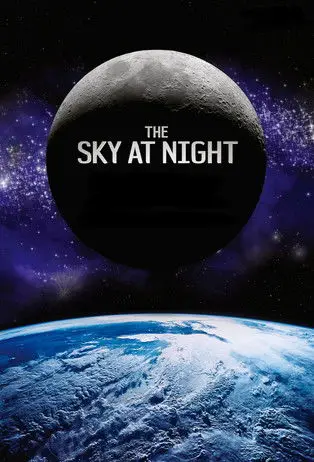
The Sky at Night · S29E01
Ep 2 00m Episodio 2
The Anglo-Australian Telescope in New South Wales is one of the largest and best telescopes in the world. With it David Malin has been taking colour pictures of remote stars and star-systems which are not only the most beautiful ever taken but are of great scientific value. David Malin talks to Patrick Moore, explaining his methods, and shows his latest photographs.
The Sky at Night · S29E02
Ep 3 00m Episodio 3
Halley's Comet is now approaching the Sun and the Earth. Patrick Moore explains when and where to look for the comet, and describes the various investigations which are to be carried out both from the Earth and by space-craft.
The Sky at Night · S29E03
Ep 4 00m Episodio 4
The Infra-Red Astronomical Satellite, IRAS, operated for most of 1983 and provided important information about subjects ranging from the dusty tails of comets to star formation in remote galaxies. Patrick Moore talks to Dr Jim Emerson of Queen Mary College about these new results and their significance.
The Sky at Night · S29E04
Ep 5 00m Episodio 5
The moon is a world of mountains, craters, valleys, peaks and huge waterless seas. Of special interest are the cracklike features known as rills, which are unlike anything we find on earth. Patrick Moore talks about them to Dr Lionel Wilson of the University of Lancaster, who has been making a careful study of these remarkable lunar features.
The Sky at Night · S29E05
Ep 7 00m Episodio 7
How do you find your way around the sky? It is not difficult; the constellation patterns are easy enough to make out. Patrick Moore conducts what may be called a guided tour, explaining where to find the planets, the main stars, and the clusters and clouds of stars, as well as giving the latest news about astronomical events.
The Sky at Night · S29E07
Ep 8 00m Episodio 8
Infra-red radiation, often termed 'heat', is an important part of the total range of wavelengths now being studied by astronomers. Striking results have been obtained at the Siding Spring Observatory in Australia. In this programme Patrick Moore talks to Dr David Allen from Siding Spring and shows some of the spectacular new pictures.
The Sky at Night · S29E08
Ep 9 00m Episodio 9
Mizar, the second star in the 'handle' of the Plough, has a faint companion, Alcor, easily visible with the naked eye. Use a telescope and Mizar is seen to be double; and the brighter member is again double. Patrick Moore talks about Mizar and speculates as to the view from a planet moving in this system.
The Sky at Night · S29E09
Ep 10 00m Episodio 10
Many amateur astronomers have large telescopes but Ron Arbour 's observatory, near Winchester, is exceptional; his 16-inch reflector is computer controlled and is programmed to hunt automatically for stellar explosions far across the universe. Patrick Moore visits the observatory to talk to Ron Arbour about his telescope and about his plans for photographing Halley's Comet later this year; during the programme he attempts to get a photograph of the comet specially for The Sky at Night.
The Sky at Night · S29E10
Ep 11 00m Episodio 11
How large is the universe? Astronomers measure the distances of very remote objects by using spectroscopes, but today there are some doubts as to whether the measurements are reliable. Two star-systems in the constellation of the Fishes appear to give very confusing results. Patrick Moore talks to Iain Nicolson about these new results and what they may mean.
The Sky at Night · S29E11
Ep 12 00m Episodio 12
Halley's Comet is now back and can be seen with binoculars, and should be visible with the naked eye next month. Patrick Moore talks to Douglas Arnold (photographing the comet); Brian Harpur (Halley Comet Society), Lee Sproates (a young amateur astronomer), and Dr Rod Jenkins of British Aerospace, who built the probe that will go right into the comet next March.
The Sky at Night · S29E12
Ep 13 00m Episodio 13
The science of astronomy is thousands of years old. Yet only in the last few decades have astronomers made discoveries that have proved the old theories wrong. Venus has no water - Mars has no canals - Man did not sink without trace into the moon's dust. Patrick Moore tells the stories of these old theories, and explains how, because of one mistake, the size of the universe was doubled.
The Sky at Night · S29E13
Califica la serie
Compartir
HijoDelMilenio
10 horas haceAmanteDeSushi99
2 días haceNetflixYRelajación
3 días haceTíoGuay123
4 días haceGatoMiau
5 días haceMcFlurry
6 días hace1337_Hablador
7 días haceMaratónDeSeries99
8 días haceAmuletoDeLaSuerte7
9 días haceBúhoNocturno24/7
10 días haceHojasDeOtoño
11 días haceBrisaDeVerano
12 días hace
La casa del dragón
Te encontraré
Rancho Dutton

FROM
Silo

The Bear

Avatar: La leyenda de Aang 2024

Elle

La maldición de Widow's Bay

Juego de tronos

Cape Fear

Vida, Larry David y la búsqueda de la infelicidad
La Agencia 2024

Breaking Bad

X-Men '97

The Boys
The Pitt

Rick y Morty

Spider-Noir

Yellowstone
Detalles